 Open main menu
Open main menu
Open main menu
Manufacturer: Phoenix Iron Company
Where made: Phoenixville, Pennsylvania
Model: 1861
Year(s) made: 1861-
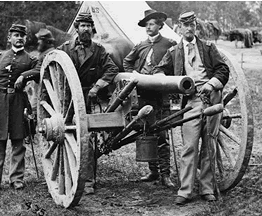
3 inch Ordnance Rifle
Description
The second most common rifled field artillery in both Armies generally, and the most common on the Maryland Campaign, the 3 inch Ordnance gun was made of hammer-welded, formed, machined iron. It was popular because of its accuracy and reliability, at least those examples built in Federal shops. Less precise machining and lower-grade iron gave their Confederate counterparts more trouble. Those built by the firm of Burton and Archer were know to be problematic.
Employment at Sharpsburg
There were probably 83 3" Ordnance Rifles in Federal Service on the Maryland Campaign, and at least 49 in Confederate batteries.
Find units equipped with these.
Ammunition Used
solid bolt, case, common shell, cannister;
"The 3-inch rifle normally fired Hotchkiss or Schenkel shells that weighed between 8 and 9 pounds. In an emergency it could use 10-pounder Parrot ammunition. It could also be used to fire cannister but, as a rifle, was not as effective with this as howitzers or Napoleons."
(from Schwartz)
Bore
3 inches
Maximum range
1830 yards
Barrel Length
69 inches
Weight
1720 pounds
Other notes
Weight figure is for gun carriage (900 lb) + tube (820 lb).
Max range is for 1 lb black powder charge behind solid shot at 5deg elevation.
More on the Web
See more about this and other Civil War artillery at the comprehensive Civil War Artillery Page, by Chuck Ten Brink or the very nice Basic Facts page from Jack W. Melton, Jr. The NPS has a fine general introduction to Civil War artillery in a 3-page presentation.
Source information
Johnson, Curt & Anderson, Richard C., Artillery Hell: Employment of Artillery at Antietam, College Station, TX: Texas A&M University Press, 1995; and
Schwartz, Peter, Artillery at Gettysburg online.